Kolak Pisang
Pencuci Mulut • Indonesia
Tentang Kolak Pisang
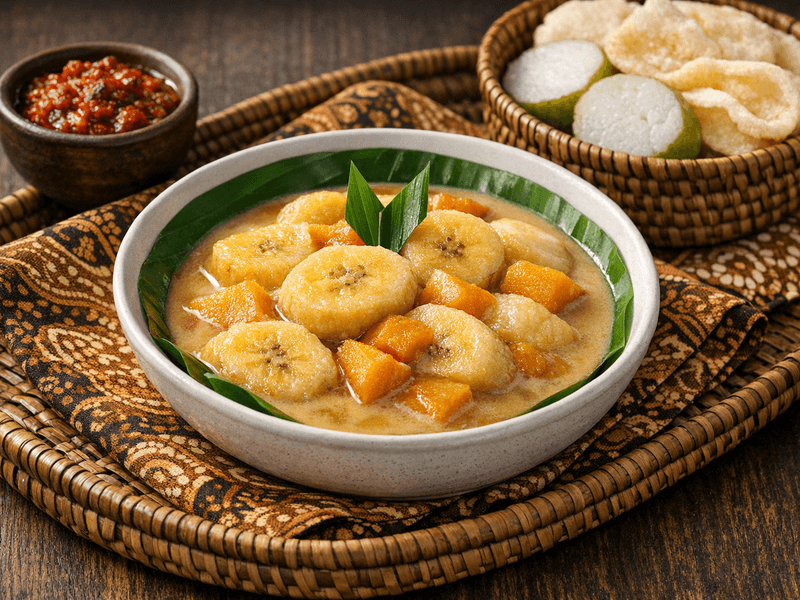
Kolak Pisang adalah salah satu makanan penutup khas dari Jawa yang sering ditemukan di warung maupun kaki lima, terutama saat bulan Ramadan. Hidangan ini terdiri dari pisang yang dimasak bersama santan, gula merah, dan beberapa tambahan seperti ubi atau kolang-kaling. Rasanya manis, beraroma khas santan, dan sering disajikan hangat, meskipun tak jarang juga kolak dijual dingin sebagai pelepas dahaga. Selain untuk berbuka puasa, kolak pisang juga jadi pilihan makanan ringan saat sore hari. Seporsi kolak pisang sekitar 100 gram mengandung energi 155 kalori, protein 2 gram, karbohidrat 30 gram, lemak total 4 gram, dan serat 2 gram. Kandungan gula dari pisang dan gula merah membuat kolak pisang cukup tinggi karbohidrat, sehingga cocok disantap sebagai menu pembuka atau camilan, namun sebaiknya tidak dikonsumsi berlebihan bagi yang sedang menjaga asupan kalori (kalori kolak pisang cukup tinggi untuk camilan). Untuk versi lebih ringan, minta supaya santan dikurangi dan pisang diperbanyak saat memesan di warung; kadang ada juga yang menambahkan potongan ubi untuk memperkaya serat.
How to Make Kolak Pisang (Traditional & Healthy Version)
Kolak Pisang is a beloved Indonesian dessert that beautifully captures the essence of traditional Indonesian flavors. Originating from Java, this sweet treat is especially popular during Ramadan, when it is commonly enjoyed to break the fast (iftar). The dish features ripe plantains or bananas gently simmered in a fragrant coconut milk sauce, sweetened with palm sugar and infused with pandan leaves for a subtle, floral aroma. The result is a comforting, mildly sweet dessert with a creamy texture and irresistible tropical notes. Kolak Pisang’s appeal lies in its simplicity and wholesome ingredients. As a vegan and vegetarian-friendly dessert, it highlights Indonesia’s rich culinary heritage and reliance on natural, plant-based ingredients. Whether served warm or chilled over ice, Kolak Pisang is a versatile dessert that brings nostalgia to many Indonesians, while offering a unique and memorable taste experience for international food lovers. Its balance of sweetness and creaminess makes it a favorite not just during festive seasons, but as a nourishing, everyday indulgence.
Ingredients(for 1 medium bowl (approx. 200 ml))
- 2 large Ripe plantains or bananas (pisang raja or pisang kepok preferred)
- 400 ml Light coconut milk (santan)
- 60 grams Palm sugar (gula aren, finely chopped)
- 1 leaf Pandan leaf (tied into a knot)
- 1/4 teaspoon Salt
- 200 ml Water
- 50 grams Sweet potato (peeled and diced small (optional)) - optional
- 50 grams Cassava (peeled and diced small (optional)) - optional
- 2 tablespoons Sago pearls (optional, pre-soaked) - optional
Instructions
- 1
Prepare all ingredients: peel and slice the plantains or bananas diagonally into 2 cm thick pieces. If using sweet potato or cassava, peel and dice them into bite-sized chunks.
5 minutes
Use overripe plantains for natural sweetness and a softer texture.
- 2
In a medium saucepan, combine water, palm sugar, and pandan leaf. Bring to a gentle boil over medium heat, stirring until the sugar dissolves completely and the mixture is aromatic.
5 minutes
Chop palm sugar finely to help it dissolve faster.
- 3
Add the sweet potato and cassava (if using) to the pot. Simmer for 10 minutes until they are almost tender.
10 minutes
Cut sweet potato and cassava evenly to ensure even cooking.
- 4
Add the sliced plantains or bananas and continue simmering for 5 minutes, until the fruit is soft but not mushy.
5 minutes
Do not overcook the bananas to maintain their shape.
Why This Dish is Healthy
This traditional Indonesian dessert is a healthy choice thanks to its plant-based ingredients and absence of processed sugars or fats. By using light coconut milk and moderate palm sugar, Kolak Pisang provides natural sweetness and healthy fats without excessive calories. Its fiber-rich components help promote satiety and stable blood sugar, making it suitable for those seeking nourishing, wholesome desserts.
Kolak Pisang features nutrient-rich bananas, which provide potassium, vitamin B6, and dietary fiber for heart and digestive health. Coconut milk adds healthy fats, while sweet potatoes and cassava (if included) contribute complex carbohydrates and vitamin A. The use of palm sugar, a natural sweetener, offers a lower glycemic index compared to refined sugar. This dessert is cholesterol-free, gluten-free, dairy-free, and high in antioxidants from the pandan leaf and root vegetables.
Pro Tips
- 💡Tip 1: Use ripe but firm plantains or bananas to prevent them from disintegrating during cooking.
- 💡Tip 2: Tying the pandan leaf into a knot makes it easier to remove and intensifies the aroma.
- 💡Tip 3: For an extra creamy texture, blend a small portion of the coconut milk before adding.
Storage & Serving
Store Kolak Pisang in an airtight container in the refrigerator for up to 2 days. Reheat gently on the stove, adding a splash of coconut milk if needed. Serve warm or cold as desired.
Best served: Breakfast or Lunch
Nutrition Facts
| Nutrient | Per 100g |
|---|---|
| Energy | 155.0 kcal |
| Protein | 2.0 g |
| Carbohydrates | 30.0 g |
| Total Fat | 4.0 g |
| Fiber | 2.0 g |
Cultural Notes
Kolak pisang sangat identik dengan bulan Ramadan di Jawa, dan menjadi ciri khas jajanan kaki lima menjelang berbuka puasa.