Karedok
Makan Siang • Indonesia
Tentang Karedok
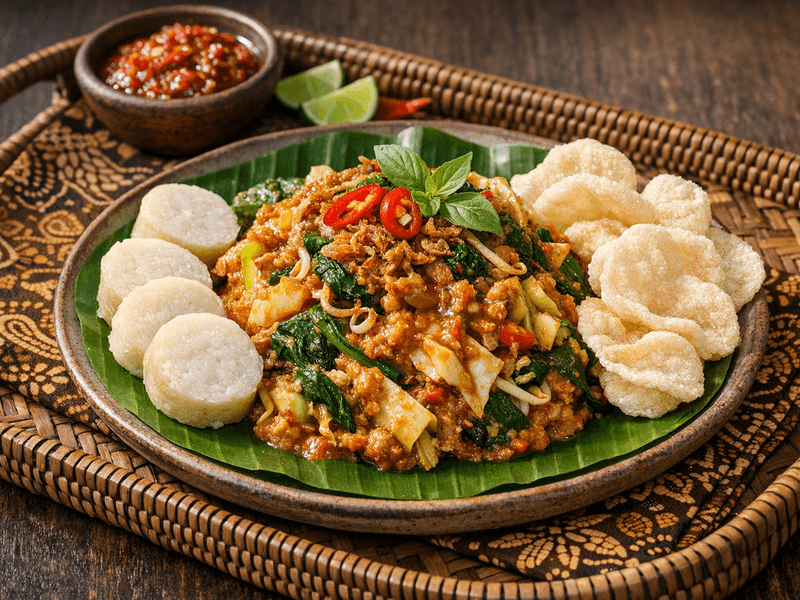
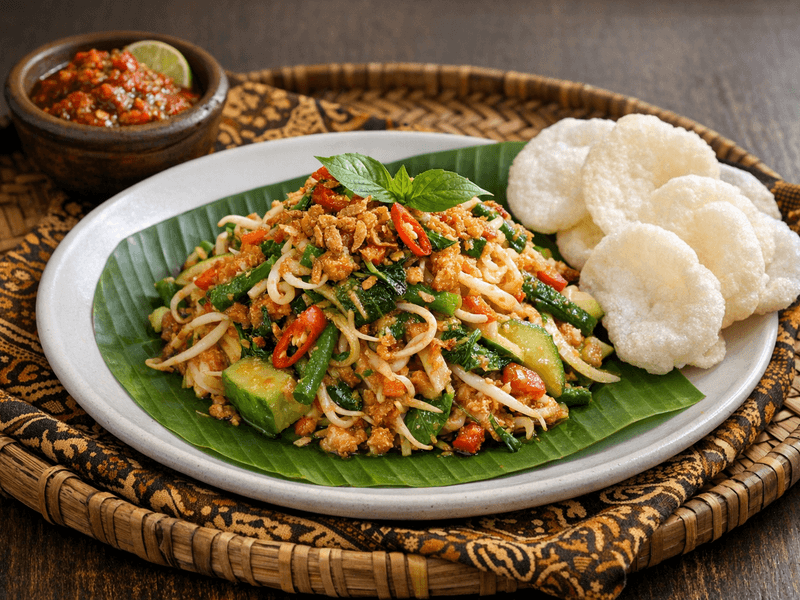
Karedok adalah salad khas Sunda yang sering ditemukan di warung dan kaki lima di Jawa Barat. Hidangan ini terdiri dari sayuran segar seperti kacang panjang, terong, tauge, kol, dan timun yang disajikan mentah, lalu diberi bumbu kacang yang gurih dan sedikit pedas. Berbeda dengan gado-gado, karedok tidak memakai sayuran rebus sehingga tekstur dan rasa sayurnya tetap renyah dan segar. Dari segi nutrisi, karedok cukup ringan: tiap 100 gram mengandung sekitar 130 kalori, 5 gram protein, 14 gram karbohidrat, 6 gram lemak, serta 4 gram serat. Ini cocok untuk yang mencari makanan vegan, vegetarian, atau halal_safe, apalagi karena serat dan protein dari sayur dan kacangnya lumayan tinggi. Kalau pesan di warung, karedok biasanya langsung dicampur dan siap makan, kadang dijadikan lauk pelengkap nasi atau teman makan dengan lontong maupun kerupuk. Untuk kalori tetap terkendali, hindari tambahan kerupuk atau lontong terlalu banyak, karena ini bisa menambah karbo dan kalori secara signifikan.
How to Make Karedok (Traditional & Healthy Version)
Karedok is a beloved Sundanese dish from West Java, Indonesia, celebrated for its vibrant medley of raw vegetables coated in a flavorful peanut sauce. This traditional salad is a staple in many Indonesian households, offering a fresh, crunchy, and aromatic experience that highlights the bounty of local produce. Karedok stands out among Indonesian salads because the vegetables are served raw, preserving their nutritional value and natural flavors. The peanut sauce, made with roasted peanuts, aromatic herbs, and a touch of spice, brings everything together with a creamy texture and a delightful balance of sweet, savory, and spicy notes. This healthy Indonesian recipe is perfect for those seeking a plant-based, vegan-friendly meal that is both satisfying and light. With no cooking required for the vegetables, Karedok is not only quick to prepare but also retains a maximum amount of vitamins and minerals typically lost during cooking. Its popularity across Indonesia stems from its simplicity, affordability, and delicious taste, making it a fantastic choice for lunch or a light dinner. Eating Karedok is a wonderful way to experience the essence of Indonesian cuisine—freshness, bold flavors, and a deep cultural connection to the land and its people.
Ingredients(for 1 generous plate per person)
- 1 cup Long beans (kacang panjang, sliced thin)
- 1/2 cup Cucumber (diced)
- 1 cup Bean sprouts (tauge)
- 1 cup Cabbage (thinly sliced)
- 1/4 cup Thai basil leaves (kemangi)
- 1/2 cup Eggplant (small, sliced thin)
- 1/2 cup Roasted peanuts (unsalted, for sauce)
- 1 Red chili (to taste, remove seeds for less heat)
- 1/2 tsp Kencur (aromatic ginger) (optional but traditional) - optional
- 1 clove Garlic (peeled)
- 1 tbsp Palm sugar (finely grated, or coconut sugar)
- 1 tbsp Tamarind water (or lime juice)
- 1/2 tsp Salt
- 3 tbsp Water (to adjust sauce consistency)
Instructions
- 1
Prepare all vegetables: wash thoroughly, then slice long beans, cucumber, cabbage, and eggplant as instructed. Place in a large mixing bowl with bean sprouts and Thai basil leaves.
5 minutes
Use fresh, young vegetables for the best crunch and flavor.
- 2
Make the peanut sauce: In a mortar and pestle or food processor, grind roasted peanuts, red chili, kencur (if using), and garlic into a coarse paste.
5 minutes
Roasting peanuts enhances the sauce’s aroma. Do not over-process; a little texture is authentic.
- 3
Add palm sugar, salt, and tamarind water (or lime juice) to the peanut mixture. Gradually add water, mixing until a smooth, pourable sauce forms.
5 minutes
Adjust water for desired thickness. Taste and balance with extra sugar, salt, or citrus.
- 4
Pour the peanut sauce over the mixed vegetables. Toss gently until all vegetables are evenly coated.
3 minutes
Toss just before serving to keep vegetables crisp.
Why This Dish is Healthy
This dish is healthy because it relies on fresh, raw vegetables, ensuring you get the maximum benefit from their vitamins, minerals, and antioxidants. The peanut-based sauce provides healthy fats and protein, supporting muscle health and satiety. Karedok is naturally vegan, low in calories, and high in fiber, making it ideal for those seeking weight management or simply a nutritious, filling meal. No frying or heavy oils are involved, and it's gluten-free if prepared with care.
Karedok is a nutrient-dense dish, rich in dietary fiber, plant-based protein, and healthy fats from peanuts. The variety of raw vegetables provides a broad spectrum of vitamins (A, C, K) and minerals such as potassium, magnesium, and folate. The peanut sauce offers heart-healthy unsaturated fats and a modest amount of protein, making this salad both satisfying and nourishing. Low in saturated fat and free from cholesterol, Karedok is an excellent choice for maintaining a balanced diet.
Pro Tips
- 💡Tip 1: Use the freshest local vegetables available for optimal crunch and flavor.
- 💡Tip 2: Adjust the peanut sauce with lime juice or tamarind water for your preferred tanginess.
- 💡Tip 3: For a richer taste, lightly toast peanuts before grinding.
Storage & Serving
For the best taste and nutrition, serve Karedok immediately after preparation. If storing, keep the sauce and vegetables separate in airtight containers in the refrigerator for up to 24 hours. Combine just before serving to maintain crispness.
Best served: Breakfast or Lunch
Nutrition Facts
| Nutrient | Per 100g |
|---|---|
| Energy | 130.0 kcal |
| Protein | 5.0 g |
| Carbohydrates | 14.0 g |
| Total Fat | 6.0 g |
| Fiber | 4.0 g |
Cultural Notes
Karedok sudah lama jadi pilihan menu sehat di Jawa Barat, terkenal sebagai makanan kaki lima maupun warung sederhana. Kelezatan bumbu kacang segar dan tekstur sayur mentah membuatnya berbeda dari salad Indonesia lainnya.